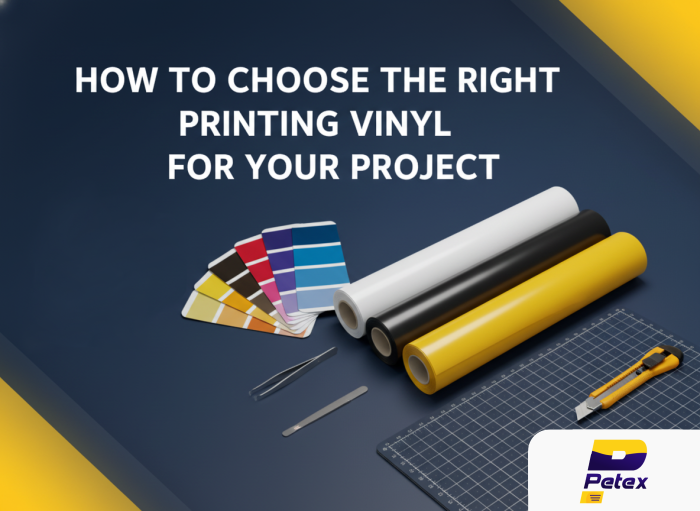
How to Choose the Right Printing Vinyl for Your Project
Choosing the correct vinyl is the single most critical decision for the success and longevity of your printing project. The right material will look great and last for years; the wrong one could fade, peel, or damage the surface.
Here is a guide to help you select the ideal vinyl for your needs.
1. Identify the Vinyl Type: Adhesive vs. Heat Transfer
The very first choice is determined by what you are applying the graphic to: a hard surface or fabric.
| Vinyl Type | Best For | Application Method | Key Consideration |
| Adhesive Vinyl | Hard, smooth surfaces (walls, glass, metal, plastic, cars, signs) | Peel-and-stick (like a giant sticker) | Surface compatibility and adhesive strength. |
| Heat Transfer Vinyl (HTV) | Fabrics and textiles (T-shirts, hats, bags, cushions) | Heat and pressure (iron or heat press) | Fabric type and ability to withstand heat. |
2. Select the Right Adhesive Strength (For Adhesive Vinyl)
Once you’ve confirmed you need Adhesive Vinyl, you must decide how permanent the application needs to be.
| Adhesive Type | Durability & Longevity | Best Applications | Notes |
| Permanent | High-strength, long-term (years), withstands weather, washing, and abrasion. | Outdoor signage, car decals, mugs/dishes, permanent business signs. | May damage surfaces (like painted walls) upon removal. Often has a glossy finish. |
| Removable | Short-term to medium-term, designed for clean removal. | Indoor wall decals, temporary promotions, seasonal window displays, stencils. | Great for beginners as it’s easier to reposition. Often has a matte finish. |
| Repositionable | Allows for light tacking and adjustment during installation. | Large graphics, complex installations, allowing a clean bond once pressure is applied. | A middle ground for tricky application surfaces. |
3. Choose the Vinyl Grade: Cast vs. Calendered
This choice affects the vinyl’s quality, cost, and how well it conforms to complex shapes.
| Vinyl Grade | Manufacturing Process | Key Characteristics | Best Applications |
| Cast Vinyl | Liquid plastic “cast” into a film (relaxed process). | Thin, flexible, durable, minimal shrinkage. High longevity (8+ years). | Vehicle wraps, curved surfaces (rivets, corrugations), long-term outdoor signs. Premium/Higher Cost. |
| Calendered Vinyl | Plastic is heated and forced through high-pressure rollers (creates tension/memory). | Thicker, less flexible, prone to some shrinkage. Medium longevity (2-6 years). | Flat surfaces (windows, simple signs, flat vehicle panels), short- to medium-term use. Economical/Lower Cost. |
4. Consider the Environment and Finish
The final choices involve how the vinyl will be seen and what elements it will face.
☀️ Environmental Factors
- Outdoor: You must choose a material with high UV protection and moisture resistance to prevent fading, cracking, and peeling. Cast vinyl or high-quality permanent calendared vinyl is essential.
- Indoor: UV resistance is less critical, allowing you to use more economical or temporary options like removable calendared vinyl.
✨ Finish Options
- Glossy: Highly reflective, vibrant colors, popular for outdoor signs and vehicle graphics, but can cause glare.
- Matte: Non-reflective, subtle, contemporary look, ideal for indoor wall art and areas where you need to eliminate glare.
- Satin/Lustre: A semi-gloss finish that offers a good balance of color saturation without high reflectivity.
- Specialty: Includes perforated window vinyl (one-way vision), translucent vinyl (for backlit signs), reflective vinyl, metallic, and glitter finishes.
🎯 Quick Decision Checklist
Ask yourself these four questions to narrow down your choice:
- Surface: Is it hard/smooth (Adhesive) or fabric (HTV)?
- Permanence: Do I need it to last for years (Permanent) or be easily removable (Removable)?
- Shape: Is the surface flat (Calendered is okay) or highly curved/complex (Cast is required)?
- Exposure: Will it be outside and exposed to sun/weather (High-quality, UV-resistant)?
For example, a T-shirt requires HTV. A temporary window decal needs Removable Calendered Adhesive Vinyl (often clear or static cling). A full car wrap requires Permanent Cast Adhesive Vinyl.